
Cage trap logistics
Cage Trap Freight Guide: Collapsible, Nested and Carton Volume
Compare cage traps by packed dimensions, nesting method, carton CBM and gross weight before deciding which quotation has the better landed cost.
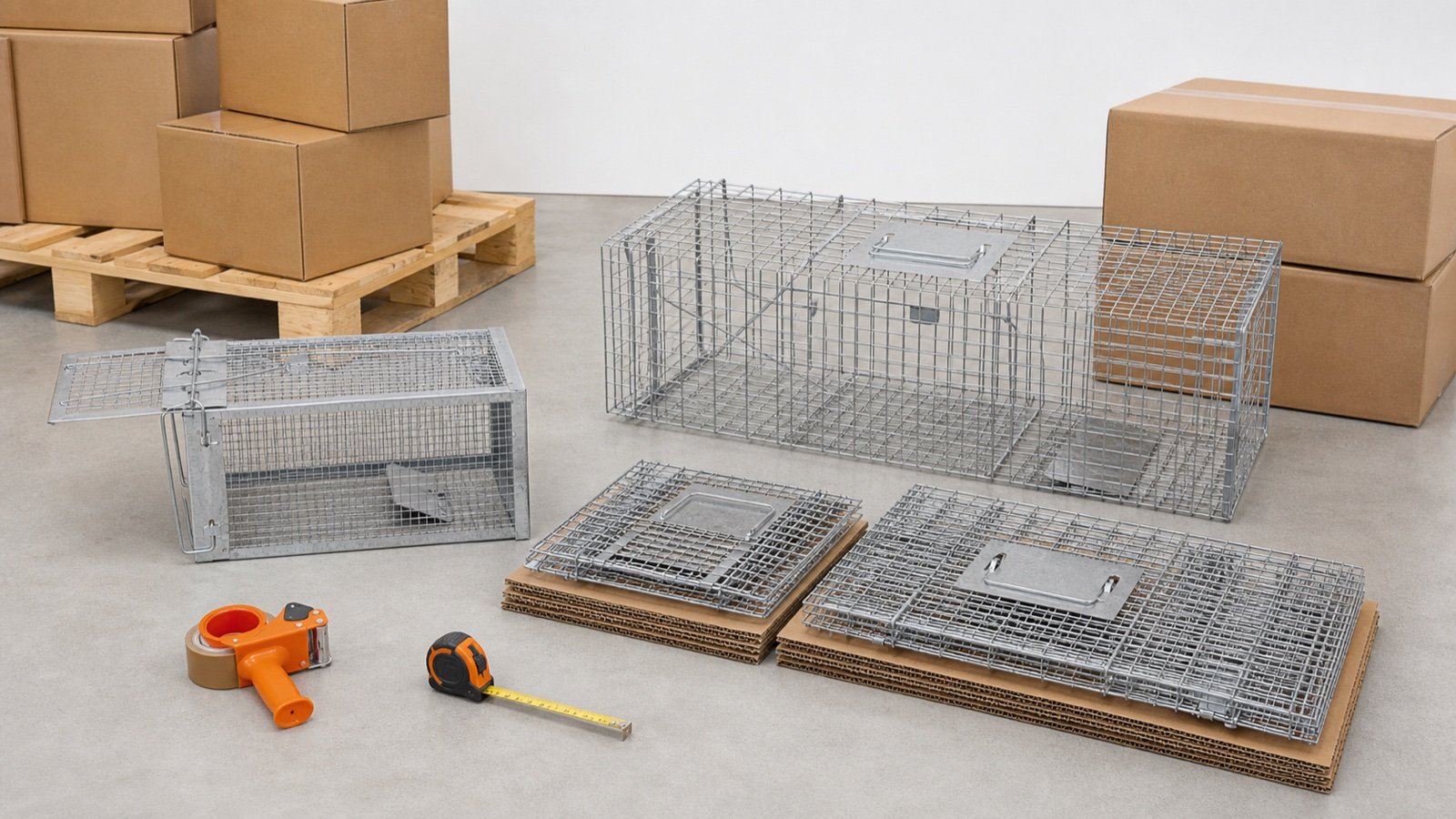
Which cage trap format usually uses freight space more efficiently?
A collapsible or nested cage trap usually uses freight space more efficiently than a fully assembled trap of similar working size, but only when the packed configuration is stable, quick to assemble and protected against deformation. Ask for the final carton dimensions and gross weight, not just the open product dimensions.
For small traps, an assembled format can still be practical because several units may nest inside one carton. For larger traps, folding panels can reduce carton volume substantially. The correct comparison is landed cost per saleable unit after packing, freight and expected handling, not the product price alone.
How do assembled, nested and collapsible cage traps compare?
| Packing format | Main advantage | Points to verify before ordering |
|---|---|---|
| Fully assembled | Ready for inspection and use with no final assembly | Carton volume, exposed door parts and protection between units |
| Nested | Several compatible units share carton space | Nesting direction, separators, removal time and surface abrasion |
| Collapsible | Large working volume can ship in a flatter format | Assembly steps, locking points, panel alignment and instruction clarity |
| Individual retail box | Better shelf presentation and unit protection | Added packaging cost, carton CBM and drop resistance |
How is cage trap carton CBM calculated?
Calculate carton volume in cubic metres by multiplying the final outer carton length, width and height in metres. For example, a carton measuring 0.80 x 0.40 x 0.35 m has a volume of 0.112 m3. One hundred cartons would occupy 11.2 m3 before allowing for pallet or loading constraints.
Use the supplier's production packing data for the final decision. A quotation based on an early sample box can change after corner protection, retail packaging or carton-strength requirements are added. Record units per carton beside CBM so buyers can compare freight cost per saleable unit.
| Input | Example value | Calculation result |
|---|---|---|
| Outer carton | 80 x 40 x 35 cm | 0.80 x 0.40 x 0.35 = 0.112 m3 |
| Shipment quantity | 100 cartons | 11.2 m3 total carton volume |
| Case pack | 5 saleable units per carton | 500 saleable units |
| Volume per unit | 11.2 m3 / 500 units | 0.0224 m3 per unit |
When does dimensional weight matter for cage traps?
Dimensional weight matters most in parcel and air services because a light but bulky carton can be charged by the space it occupies. FedEx and UPS publish carrier-specific methods that compare actual and dimensional weight. Divisors, rounding and service rules vary, so use the current carrier calculation for the booked service.
For ocean or road freight, carton CBM, gross weight, loading method and destination handling remain central. Ask the forwarder whether the shipment is priced by weight, measure, pallet position or another basis. Do not apply a parcel formula to every freight mode.
What packing checks protect cage traps in transit?
- Confirm that doors, trigger rods and handles cannot move freely inside the carton
- Use separators or sleeves where nested metal surfaces may rub during transport
- Check that collapsible panels remain flat and do not load force onto trigger components
- Pack instructions and any assembly tool where the customer will find them
- Verify the final case count, gross weight, carton dimensions and shipping marks
- Run a packing trial with the exact retail pack before approving the master carton
What should a cage trap freight quotation include?
Request one packing sheet for every model and configuration. It should identify whether the product ships assembled, nested or collapsed and show both the product dimensions in use and the final export-carton dimensions. This prevents an attractive unit price from hiding an expensive packing format.
The buyer should also confirm the Incoterm, loading port, destination, expected order quantity and whether pallets or retail boxes are required. Recalculate the freight comparison whenever the pack count or carton size changes.
| Data field | Why it matters | Evidence to request |
|---|---|---|
| Working product size | Confirms the trap fits the intended target and placement | Dimensioned product sheet |
| Packed unit size | Shows the true retail or folded format | Packed sample photograph |
| Units per carton | Connects quantity to freight volume | Packing specification |
| Carton size and gross weight | Supports CBM and freight estimates | Final carton record |
| Assembly method | Affects customer use and returns | Instruction sheet or assembly test |
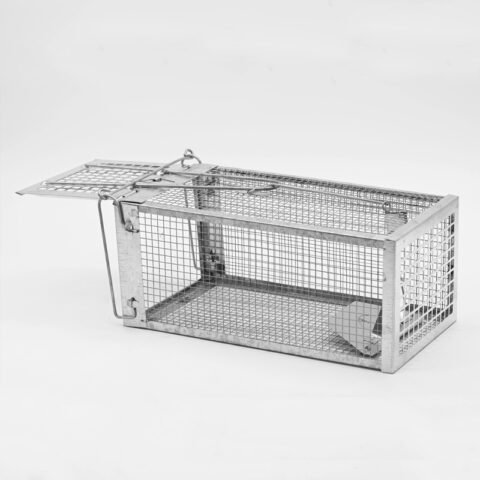
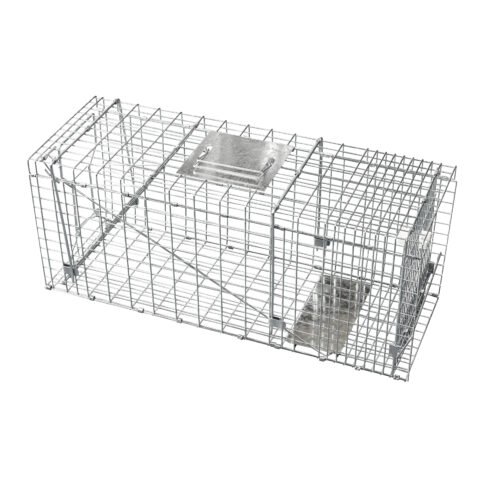
Compare compact and large collapsible cage-trap formats
Use the exact model, working dimensions and proposed packing configuration when asking for freight data. Product size alone does not show the final shipping volume.
Frequently asked questions
Is a collapsible cage trap always cheaper to ship?
No. It often reduces volume, but the result depends on the folded size, units per carton, product weight, protective packing and freight mode. Compare the final carton CBM and landed cost per unit.
Should I use product dimensions to calculate cage trap freight?
Use final outer-carton dimensions and gross weight. Product dimensions describe the trap in use, while freight is normally based on the packed shipment.
What should be tested on a collapsible cage trap sample?
Check assembly time, panel alignment, door movement, trigger function, locking points, instruction clarity and whether repeated folding affects the finish or mechanism.
Can Baikang help prepare cage traps for export shipment?
Baikang can review suitable models for nested or collapsible packing, retail boxes, assembly instructions, carton quantity, shipping marks, pallet requirements and freight coordination based on the buyer's destination and order plan.