
Rodent bait station buying
Mouse vs Rat Bait Stations: Size, Entry, Locking and Weighted Base
Select a rodent bait station by target species, placement, entry size, locking method, anchoring and the applicable bait label.
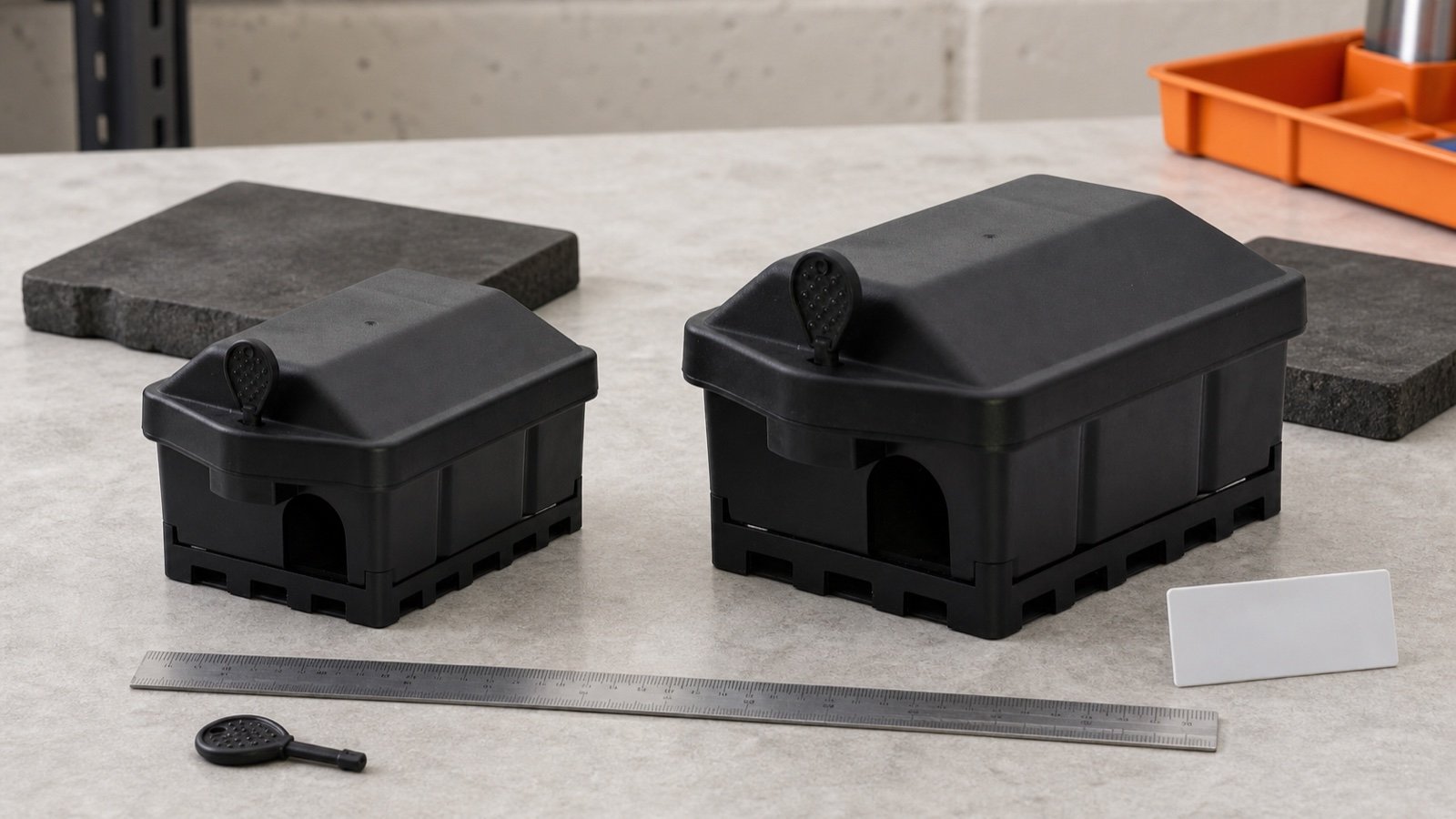
What is the main difference between mouse and rat bait stations?
Mouse bait stations are generally more compact with entrances and internal space designed around mice. Rat bait stations are larger to accommodate rat movement, bait layout and more substantial placement requirements. Buyers should select by target species and the applicable bait label, not by choosing the smallest station that appears convenient.
A professional comparison should also cover lock security, internal bait containment, anchoring or weighted-base options, service access, weather exposure and room for the required label or service record.
How do mouse and rat bait station requirements compare?
| Decision factor | Mouse station | Rat station |
|---|---|---|
| Overall format | Compact for restricted indoor or protected placements | Larger footprint and internal passage for rats |
| Entry and pathway | Sized and arranged for mouse access | Sized and arranged for rat access |
| Bait space | Suitable for the intended mouse bait or monitor layout | More internal room for approved rat-control placement |
| Anchoring | Fixed, secured or placed as the label and site require | Anchoring or a weighted base is often a key buying question |
| Service access | Fast opening can support frequent compact-site checks | Lid strength, key access and interior visibility need review |
When should a weighted-base bait station be specified?
A weighted base can help keep a station in its intended position, especially where the service plan requires a stable outdoor or perimeter placement. It is not a substitute for following the bait label or site-specific anchoring requirement. Confirm whether the weight is integrated, removable or supplied as a separate component.
Weighted formats also affect shipping. The quotation should state station weight, weight-block material, units per carton, gross weight and carton dimensions. Compare the additional delivered cost with the installation time or anchoring method used by the customer.
| Question | Why it matters | Approval check |
|---|---|---|
| Is the weight attached or removable? | Changes packing, assembly and service handling | Packed sample and assembly instruction |
| What material is used? | Affects weight, durability and destination acceptance | Component specification |
| Can the station still be fixed? | Some sites require an additional securing method | Base and fixing-point review |
| What is the final gross weight? | Controls freight and manual handling | Production carton record |
What makes a bait station lockable and serviceable?
A lockable station should require the intended key or tool to open and should remain closed under normal placement and handling. Evaluate the latch, hinge, key engagement and repeated opening cycles on a production sample. The key plan should state how many keys are supplied per case or service kit.
Serviceability includes more than opening speed. The technician needs clear access to the internal bait area, practical cleaning surfaces and a way to place or retain bait as permitted by the label. Logo or label placement should not cover the lock, safety information or service record.
Which U.S. EPA criteria are relevant to bait-station buyers?
The U.S. EPA's bait-station guidance describes design factors such as weather resistance where applicable, strength, locking or sealing, target-sized entrances, anchoring or immobilization, internal bait containment, child-unattractive design and space for precautionary statements. These criteria are useful questions for a buyer specification.
Regulatory language must be used carefully. Pesticide labeling requirements apply to the registered bait product and its permitted use. A standalone station should not be advertised with an EPA tier, certification or use claim unless the exact evidence and applicable label support it. Use EPA's current Pesticide Product and Label System to check the registered product label.
| Design area | Buyer question | Evidence to review |
|---|---|---|
| Closure | Does the station stay locked until the intended key or tool is used? | Repeated opening and pull test |
| Entrance | Is access appropriate for the target rodent and placement? | Dimensioned drawing and physical sample |
| Containment | How is bait retained inside the station? | Interior layout and approved bait configuration |
| Placement | Can the station be anchored, fixed or weighted as required? | Base design and installation method |
| Information area | Is there space for warnings, identity and service records? | Final label and artwork proof |
What should a bait station RFQ include?
- Target rodent: mouse, rat or another defined species
- Intended indoor, outdoor, protected or perimeter placement
- Station dimensions, entrance dimensions and internal layout
- Lock type, key quantity and repeated-cycle test
- Anchoring points, integrated weight or separate paver requirement
- Approved material, color, logo and label area
- Retail pack, instructions, case count and carton data
- Destination-market claims and warnings supplied or approved by the buyer
Compare weighted mouse and rat bait-station formats
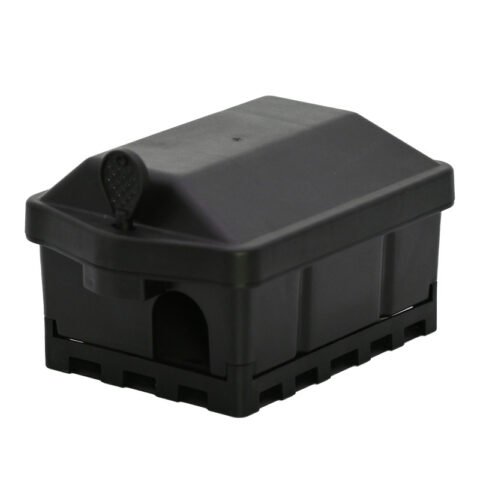
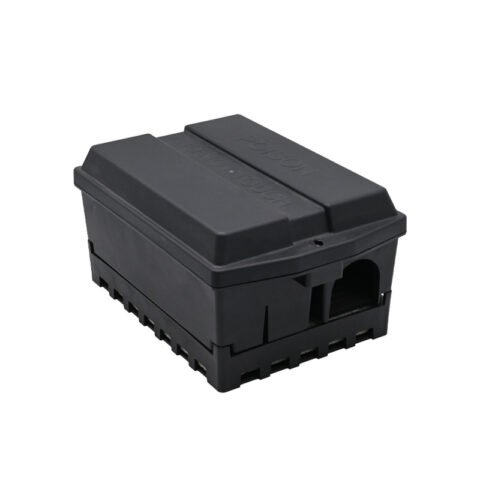
These PESTCON models show the difference in product scale and weighted-base planning. Confirm dimensions and use requirements for the target program before requesting samples.
Frequently asked questions
Can a mouse bait station be used for rats?
Do not assume so. Select a station designed for the target rodent and use it only as permitted by the applicable bait label and local rules.
Is a weighted bait station the same as an anchored station?
No. A weighted base can improve stability, while anchoring physically secures the station to a surface or object. The label and site plan determine which method is required.
Does a lockable bait station make any rodenticide safe around children or pets?
No. Risk depends on the registered bait product, label directions, station design, placement and service. Always follow the label and keep stations away from children, pets and non-target animals.
Can Baikang customize rodent bait stations?
Baikang can review suitable models for color, logo application, warning and service labels, keys, weighted-base components, retail packaging, instructions, barcode labels and export-carton requirements.
Further reading
Continue learning
Related pest control guides.
Integrated Pest Management Basics: A Practical Five-Step Plan
Use inspection, prevention, monitoring and targeted control as one repeatable pest management process.
Read guide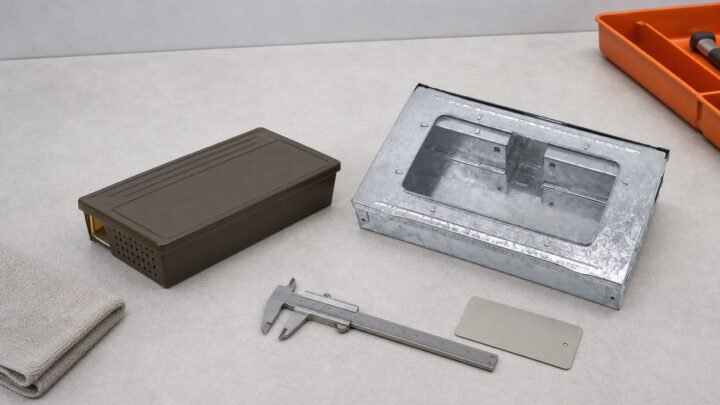
Plastic vs Galvanized Multi-Catch Mouse Traps: Clear Lid or Solid Lid?
Choose a multi-catch mouse trap by inspection access, material, cleaning process, finish protection and the service routine of the target location.
Read guidePowder Duster Safety Guide for Crack-and-Crevice Applications
A cautious checklist for selecting, filling, applying and cleaning a hand-operated pesticide powder duster.
Read guide