
Flying insect control
Insect Light Trap Types: Glue Board, Electric Grid or Fan Suction?
Compare glue-board, electric-grid and fan-suction insect light traps by target insect, placement, service needs and importer checks.
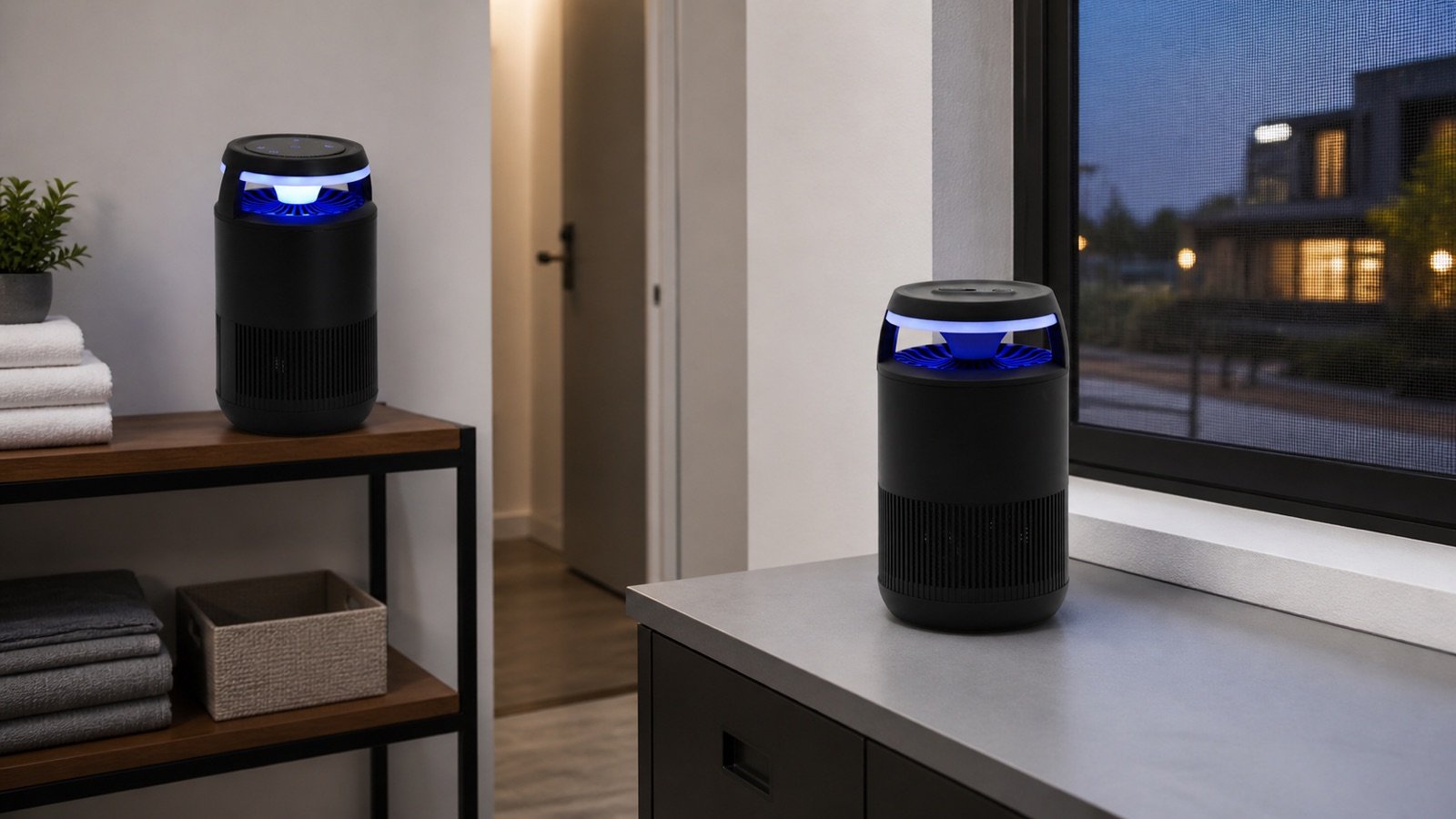
Which insect light trap type fits each application?
The right insect light trap is selected by target insect, capture method, placement risk and service routine, not by light brightness alone. Glue-board units retain insects on an adhesive surface, electric-grid units stun or electrocute insects, and fan-suction units draw insects into a chamber. Each format creates a different cleaning, consumables and inspection requirement.
| Format | How insects are retained | Typical fit | Service evidence | Buyer checks |
|---|---|---|---|---|
| Glue-board light trap | Insects contact a replaceable adhesive board inside the unit. | Commercial indoor monitoring where quiet operation, containment and count records are valued. | Board condition, species and count can be recorded at service. | Board dimensions, replacement access, lamp specification, consumable availability and heat resistance. |
| Electric-grid light trap | An energized grid stuns or kills insects; a tray or enclosed body should retain debris. | Non-food-exposure areas where sound, cleaning and fragment risk have been assessed. | Collector tray and grid condition show activity but may be less convenient for identification. | Retention design, grid access, cleaning isolation, guard spacing, power input and destination compliance. |
| Fan-suction light trap | A light source attracts insects near an intake and a fan draws them into a collection chamber. | Compact indoor consumer, hospitality or light-commercial applications with regular chamber cleaning. | Captured insects remain in the chamber for visual review. | Airflow path, chamber closure, fan noise, cleanability, cable or adapter and replacement parts. |
Why does the target insect matter more than the color of the light?
Flying insects do not all respond to the same cues. House flies, stored-product moths and host-seeking mosquitoes differ in behavior, active period, flight height and attraction to light, odor, heat or carbon dioxide. A blue glow is therefore not proof that a unit will perform equally against every flying insect.
The CDC mosquito surveillance guidance describes several trap types for different mosquito species and life stages. Its field light trap combines light with a fan and may use carbon dioxide as an additional attractant. A compact indoor consumer trap is not the same instrument and should not borrow a surveillance trap’s performance claims without product-specific test data.
For a buyer, the useful questions are concrete: Which insect was used in the test? Was the test conducted indoors or outdoors? What was the room size, competing light level, operating time and distance from the release point? Ask for the method with the result.
What changes when an insect light trap is used near food?
Food areas require control of insect fragments as well as insect activity. Section 6-202.13 of the FDA Food Code 2022 says devices that electrocute or stun flying insects should retain insects within the device. It also says insect control devices should not be installed over food-preparation areas or where insects or fragments could fall or be propelled onto exposed food and clean items.
The FDA Food Code is a model used by jurisdictions, not a universal installation permit. Buyers should check the rule adopted at the destination and have the final device position reviewed by the site’s food-safety or pest-management lead. A product marked for indoor use is not automatically suitable for every food-handling zone.
- Keep the unit away from exposed food, clean utensils and unwrapped single-use articles.
- Avoid positions that draw insects across an open doorway or toward food activity.
- Provide safe service access without carrying captured insects through a preparation area.
- Record the device number, location, service date and findings when the unit is part of a monitoring plan.
How should an importer compare insect light trap samples?
A sample review should separate attraction claims from product workmanship. Run the same operating check on each sample, in the same room and for the same duration. Record ambient light, placement and noise rather than judging from a brief desktop demonstration.
| Check | What to record | Why it belongs in the specification |
|---|---|---|
| Electrical configuration | Rated input, cable, plug or adapter, controls, timer modes and required destination documents. | The same housing can be supplied with different electrical parts or labels. |
| Light source | Source type, stated wavelength if relevant, replaceability, rated life and operating modes. | Do not treat visible color as a verified wavelength or performance result. |
| Capture system | Glue-board fit, grid retention or fan airflow and chamber closure. | The capture mechanism determines containment, cleaning and spare-part needs. |
| Service access | Opening method, tool requirement, cleaning steps and surfaces that contact captured insects. | Routine servicing should not damage clips, guards or wiring. |
| Retail pack | Unit protection, accessory count, manual, warnings, barcode, carton quantity and drop-test plan. | Electrical products can arrive functional but still fail because the retail pack or accessory set is wrong. |
What is the verified catalogue reference for PC-801 and PC-802?
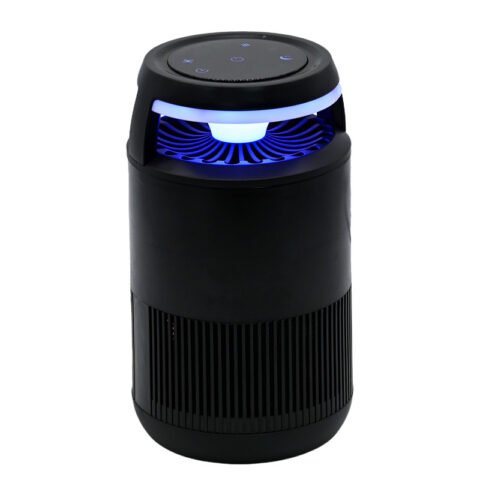
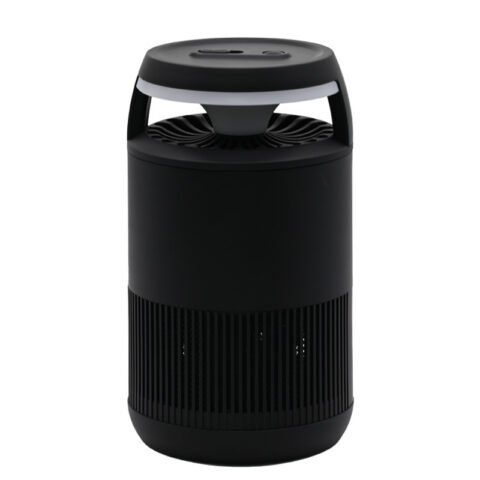
PC-801 and PC-802 are compact indoor light-trap formats in the current PESTCON range. The recorded dimensions and packing fields are the same, so the model choice should be confirmed against the approved sample, control configuration and requested market specification instead of the model name alone.
| Model | Catalogue format | Unit reference | Packing reference | Confirm before order |
|---|---|---|---|---|
| PC-801 | Fly & Mosquito Light Trap Pro | 13.8 x 13.8 x 23 cm; 566 g | 1 pc/box; 12 boxes/carton; carton 58 x 44 x 25.5 cm | Controls, light and fan modes, electrical configuration, artwork and destination documents. |
| PC-802 | Fly & Mosquito Light Trap Lite | 13.8 x 13.8 x 23 cm; 566 g | 1 pc/box; 12 boxes/carton; carton 58 x 44 x 25.5 cm | Controls, light and fan modes, electrical configuration, artwork and destination documents. |
These are quotation references, not installation claims. For range planning, send the destination market, sales channel, target insect, expected quantity, electrical requirement and packaging route with the model number.
Frequently asked questions about insect light traps
Do indoor light traps replace mosquito source reduction?
No. The CDC recommends removing standing water, maintaining screens and using several control methods. A light trap addresses some adult insect activity; it does not remove eggs or larvae developing in water.
Can an insect light trap be mounted above a food-preparation table?
Do not assume it can. The FDA Food Code says insect control devices should not be located over food-preparation areas and should be positioned so insects or fragments cannot contaminate exposed food or clean items. Check the locally adopted rule and the device instructions.
Does a brighter blue light mean a better mosquito trap?
No. Target species, wavelength, competing light, airflow, placement and other attractants affect capture. Compare products under a defined test method and ask for target-insect data.
How often should a fan-suction trap be cleaned?
Follow the product instructions and inspect the chamber often enough to prevent blockage, odor or escape during service. The interval should reflect activity and operating conditions rather than a fixed universal schedule.
Further reading
Continue learning
Related pest control guides.
Integrated Pest Management Basics: A Practical Five-Step Plan
Use inspection, prevention, monitoring and targeted control as one repeatable pest management process.
Read guide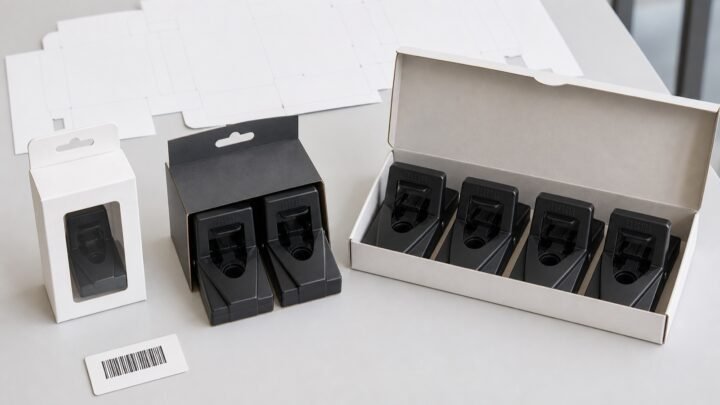
Retail Multipacks for Mouse Traps: 1-Pack, 2-Pack or 4-Pack?
Choose a mouse-trap pack count by placement need, shelf price, fulfillment rules and carton efficiency, then control the barcode and set packaging as one SKU.
Read guide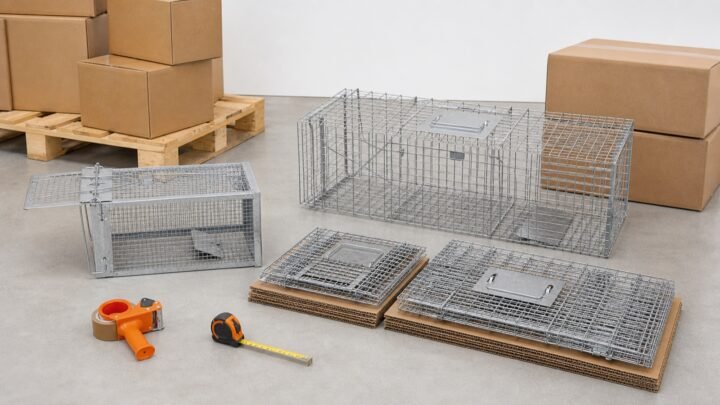
Cage Trap Freight Guide: Collapsible, Nested and Carton Volume
Compare cage traps by packed dimensions, nesting method, carton CBM and gross weight before deciding which quotation has the better landed cost.
Read guide