
Product quality
Pest Control Product Quality Inspection: AQL, Function and Packaging Checks
Build a practical pest control product inspection plan covering approved samples, AQL sampling, function tests, packaging and shipment evidence.
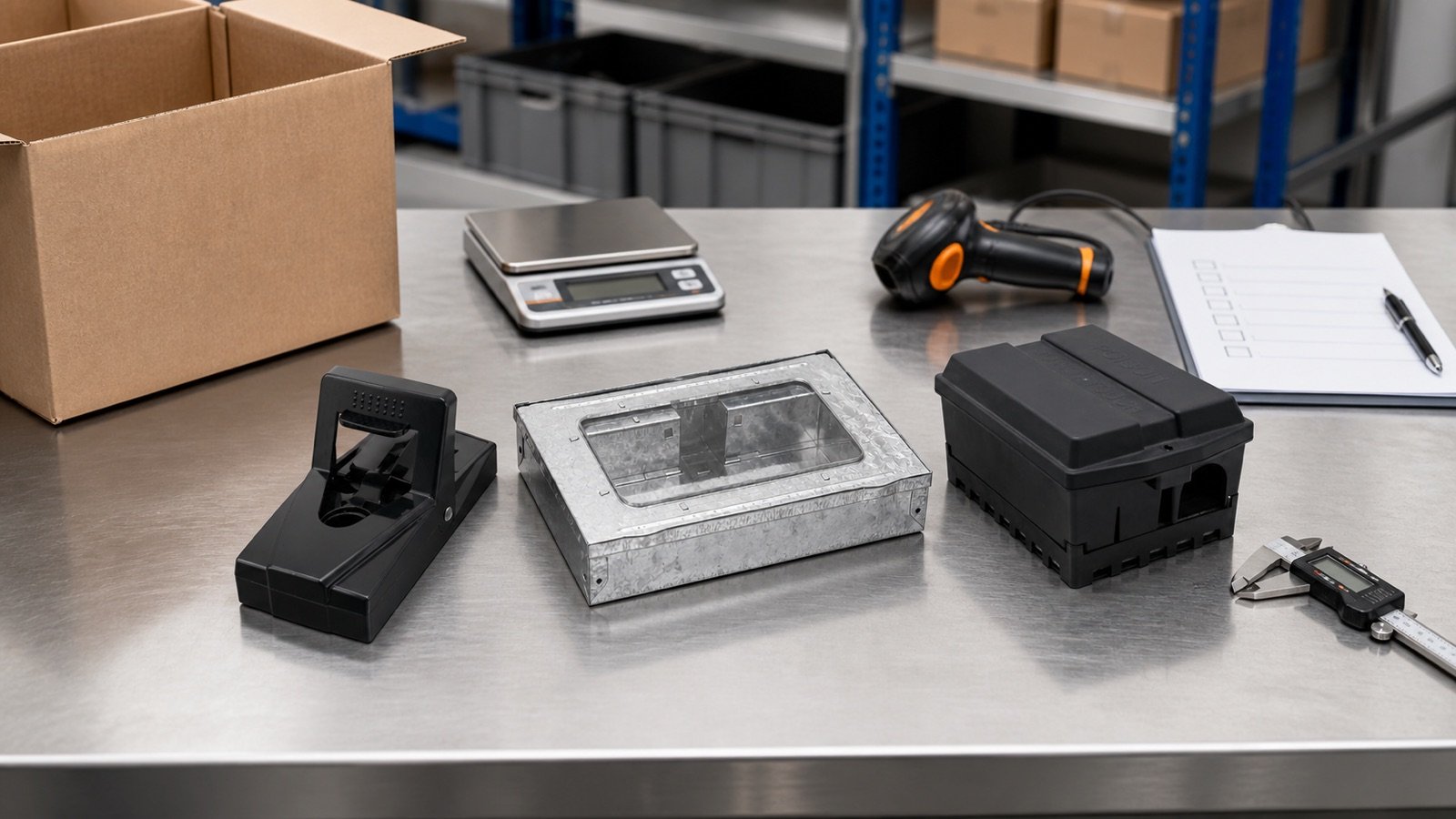
What makes a pest control product inspection useful?
A useful final inspection compares production against an approved specification, a signed sample and defined defect rules. It combines random sampling with product-specific function checks, packaging verification and a written release decision. An AQL result alone does not prove that the model, artwork or test method was correct.
Before production starts, the buyer and supplier should agree on five records: the product specification, functional criteria, packaging specification, approved reference sample and inspection plan. The same records should be used for reorders so that an old artwork file or component version does not quietly return.
| Approval record | Minimum content | Release evidence |
|---|---|---|
| Product specification | Model, material, color, dimensions, unit weight, components, accessories and finish. | Dated PDF or controlled specification number. |
| Functional criteria | Setting, triggering, door, lock, hinge, fit, airflow or electrical checks relevant to the product family. | Named test method with pass or fail limits. |
| Packaging specification | Pack count, dieline, artwork version, barcode, warnings, instructions, carton marks and pallet request. | Approved artwork and packing sample. |
| Golden sample | A physical sample that represents the accepted product and pack. | Signed label, approval date and secure storage. |
| Inspection plan | Lot definition, sampling standard, level, defect classes, AQLs, special tests and reporting format. | Purchase-order attachment or quality agreement. |
How should critical, major and minor defects be defined?
Defect classes should describe risk and loss of intended use in language that an inspector can apply consistently. The examples below are starting points, not automatic legal classifications or fixed AQL recommendations. The buyer should adjust them to the product, destination and approved specification.
| Defect class | Working definition | Possible examples |
|---|---|---|
| Critical | A condition that may create an unreasonable safety or regulatory risk. | Accessible live electrical part, severe sharp edge, missing required warning, wrong rated-input label or lock failure where the agreed safety function depends on locking. |
| Major | A defect likely to prevent intended use, cause a return or materially reduce saleability. | Snap trap will not set, cage door will not latch, bait-station key does not open the unit, missing component, incorrect barcode or retail pack count. |
| Minor | A workmanship issue that does not materially affect intended use or required information. | Small cosmetic mark outside the agreed appearance limit, slight color variation within an accepted range or a non-prominent print blemish. |
Reference photographs help inspectors distinguish a minor cosmetic mark from a major finish problem. For ambiguous defects, the report should isolate the affected sample and obtain a buyer decision instead of silently changing the classification.
Which function checks belong to each product family?
Generic appearance checks miss the failures that matter in use. A pest control product inspection should test the mechanism that makes the product work, using a safe and repeatable method agreed before production.
| Product family | Function checks to define | Related workmanship checks |
|---|---|---|
| Plastic snap traps | Set and release cycle, trigger engagement, strike-bar travel and reset after activation. | Part fit, spring seating, flash, cracks, fasteners and edges. |
| Multi-catch mouse traps | Entry-door movement, ramp return, lid opening and closure, internal clearance and inspection-window fit. | Seams, rivets, coating or galvanizing, clear-panel scratches and base stability. |
| Rodent bait stations | Lock and key operation, key interchangeability, hinge movement, closure, internal rod fit and paver fit where supplied. | Entry openings, molding, cracks, lid alignment, labels and packaged key count. |
| Live-catch cage traps | Trigger sensitivity method, door travel, latch engagement, collapse locks and carrying-handle clearance. | Wire spacing, welds, coating, dimensions, sharp ends and deformation. |
| Powder dusters | Reservoir or bulb compression, tube connection, extension fit and controlled airflow using an agreed inert test material. | Leaks, blocked tube, thread fit, finish and accessory count. |
| Electrical insect traps | Power and controls, light source, fan or grid operation, chamber closure and an agreed running-time check. | Rated label, cable or adapter, guard, abnormal noise, odor, loose parts and retail-pack protection. |
What does AQL sampling actually do?
ISO 2859-1:2026 provides acceptance-sampling schemes indexed by acceptance quality limit for lot-by-lot inspection by attributes. A sampling plan uses the lot size, inspection level and selected scheme to determine a sample size and acceptance or rejection numbers. It provides a consistent lot decision without opening every unit.
AQL is not a promise that the shipment contains no defects. It is also not a substitute for checking every unit when a specific safety or contractual requirement calls for 100 percent screening. The inspection instruction should state:
- The exact standard edition and whether the plan is single, double or multiple sampling.
- How the production lot is defined and whether all cartons are available for random selection.
- The inspection level and AQL assigned to each defect class.
- Any tests performed on a smaller special sample and whether those tests are destructive.
- What happens after rejection: sorting, rework, reinspection or shipment hold.
For a new supplier or changed model, inspection may need more than a routine final random check. Incoming-component review, first-article approval and in-process checks can catch the wrong spring, key, board, cable or artwork before the full lot is packed.
How should packaging be checked for wholesale and e-commerce orders?
Packaging inspection starts with identity and quantity: correct model, accessory set, instruction version, barcode, unit pack, inner pack and master-carton count. The inspector should scan representative barcodes, measure carton dimensions, weigh packed cartons and compare shipping marks with the approved document.
Transport testing should match the distribution route. ISTA Procedure 3A, for example, covers individual packaged products of 70 kg (150 lb) or less moving through a parcel-delivery system and includes standard, small, flat and elongated package types. That does not automatically make 3A the correct test for a palletized wholesale master carton. Select the protocol around the actual pack and route.
- For retail shelves, check print quality, hanging or display function, tamper evidence where specified and front-panel product identification.
- For e-commerce, check internal restraint, edge and trigger protection, accessory movement, parcel-label area and barcode readability after the agreed test.
- For export cartons, check case quantity, dimensions, gross weight, carton strength specification, shipping marks and pallet pattern.
What evidence should the buyer receive before shipment?
A useful inspection report lets a buyer understand the lot without being in the factory. It should identify the order, model, lot size, available quantity, sampled cartons, sample size, defect counts and final result. Photographs should show the lot, random carton selection, each test and each defect.
Ask for measured values rather than only checked boxes. Dimensions, weights, barcode scans, carton data and function-cycle results are easier to compare on the next order. When a defect is corrected, add the corrective-action evidence to the same order record.
| Model | Verified unit reference | Packing reference | Primary inspection emphasis |
|---|---|---|---|
| PC-101 Plastic Mouse Snap Trap | 10.3 x 5 x 5 cm; 52 g | Bulk packing; 100 pcs/carton | Set-release function, spring and trigger fit, molding and carton quantity. |
| PC-203CL Clear-Lid Multi-Catch Mouse Trap | 26 x 16 x 5 cm; 560 g | Bulk packing; 12 pcs/carton | Entry mechanism, lid and clear-panel fit, rivets, galvanized finish and deformation. |
| PC-404PV Rat Bait Station with Paver | 30 x 21 x 15 cm; 4.1 kg | 4 pcs/carton; carton 42.5 x 31 x 32.5 cm; 15.6 kg | Lock and key, closure, paver fit, molding, packed weight and carton protection. |
Baikang can review the inspection points against the selected model, packaging route and destination requirements. Add any buyer-specific test method or third-party inspection requirement to the RFQ before the order is released.
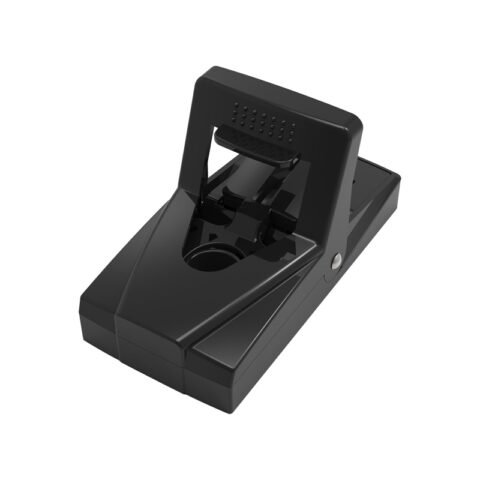 PC-101Plastic Mouse Snap Trap↗
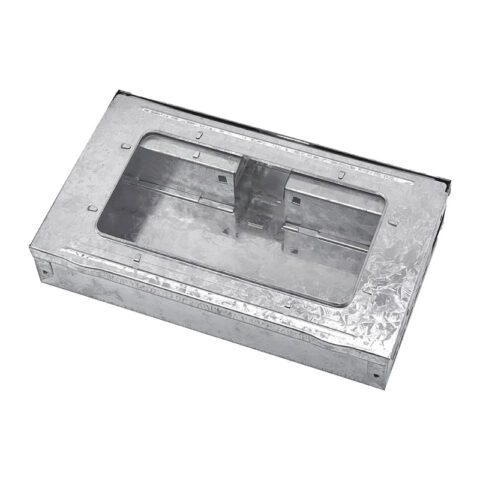 PC-203CLGalvanized Multi-Catch Mouse Trap with Clear Lid↗
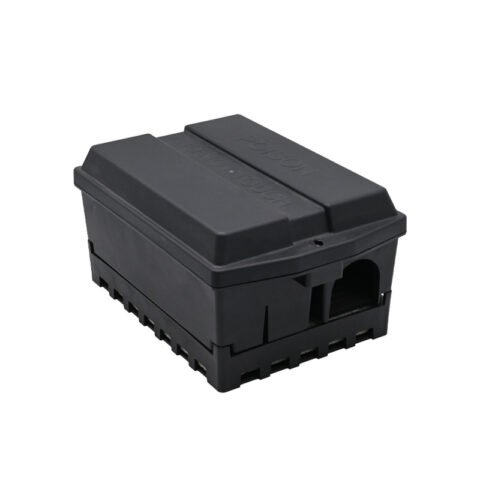 PC-404PVPlastic Rat Bait Station with Paver↗
Frequently asked questions about product quality inspection
Is an AQL inspection the same as 100 percent inspection?
No. AQL inspection uses a sample to make a lot decision under an agreed plan. A 100 percent inspection checks every unit for the specified characteristic. Some safety, regulatory or high-risk characteristics may need separate screening.
What is a golden sample?
A golden sample is the dated, approved physical reference for the expected product and packaging. It should be identified, protected from unrecorded changes and available when production or a claim is reviewed.
Can a buyer rely on the supplier’s inspection report?
A supplier report is useful when the test method, sample selection and evidence are clear. Buyers may also appoint an independent inspection company for verification, especially for a first order, changed product or high-value shipment.
Should packaging have a separate inspection plan?
Yes. Product function can pass while the barcode, instruction, pack count or carton protection is wrong. Packaging identity, workmanship and transport performance should have their own criteria in the order specification.
Further reading
Continue learning
Related pest control guides.
Mouse Trap Placement Checklist for Better Monitoring and Control
A placement and servicing checklist based on mouse travel behavior, inspection evidence and site safety.
Read guide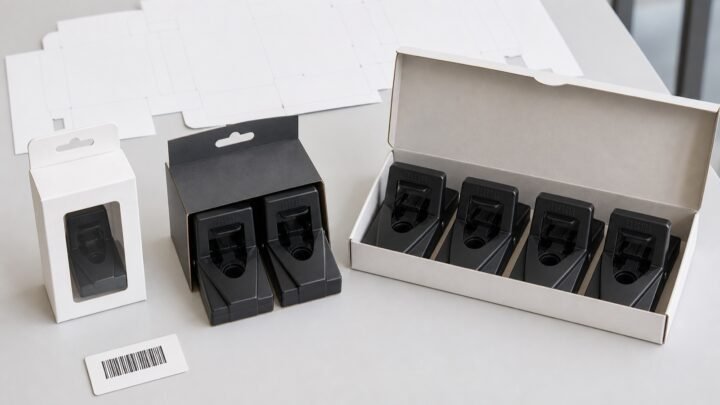
Retail Multipacks for Mouse Traps: 1-Pack, 2-Pack or 4-Pack?
Choose a mouse-trap pack count by placement need, shelf price, fulfillment rules and carton efficiency, then control the barcode and set packaging as one SKU.
Read guide
How to Compare Pest Control Product Quotations: MOQ, Carton CBM and Landed Cost
Normalize specification, packaging, Incoterm, carton volume and destination charges before comparing pest control product prices.
Read guide